
A quintessential part of wedding attire, the term boutonnière comes from the French word bouton, meaning flower bud. This floral accessory can vary significantly in design, ranging from a single flower to a small cluster of blooms, often accompanied by greens or other decorative elements. Throughout the years, boutonnières have evolved in their style and materials but always retain their role as a symbol of celebration and honour. They not only enhance the overall look, but also signifies the role of the wearer, often identifying them as a member of the wedding party.
Boutonnières can be crafted from a variety of materials including:
Fresh flowers: The most traditional choice, fresh flowers are vibrant and fragrant. Common options include roses, orchids, and lilies, selected to complement the bridal bouquet or the overall colour scheme of the wedding.
Dried flowers: Dried boutonnières have grown in popularity due to their unique textures and rustic appeal. These can include elements like lavender, eucalyptus, or even thistles.
Faux flowers: For those who prefer a long-lasting option, high-quality artificial flowers can make an exquisite boutonnière. These are often used in destination weddings where freshness could be an issue.
Mixed media: Some modern boutonnières incorporate non-floral elements, such as feathers, twine, or even decorative pins and brooches, creating a more personalised and unique accessory.
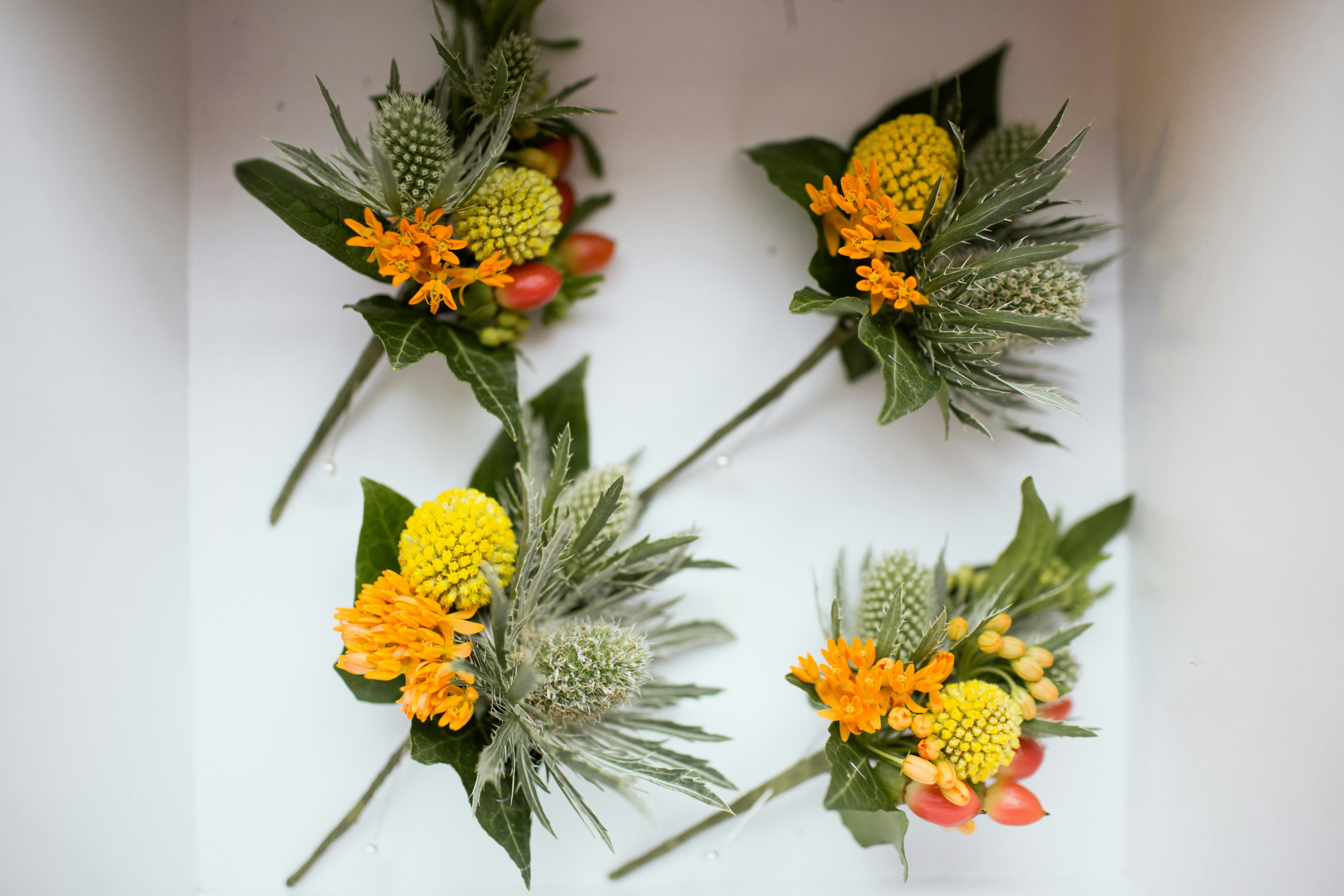
Wearing a boutonnière correctly is essential to ensure it looks stylish and feels secure. The boutonnière should be affixed to the left lapel of the jacket. This is traditionally where the flower can be viewed easily and is close to the heart, symbolising love.
Using a straight pin, the boutonnière should be gently pierced through the fabric of the lapel. The pin should go in from behind the lapel and into the stem of the boutonnière, ensuring that the flower is securely attached without damaging the fabric. Ensure that the boutonnière sits flat against the jacket and adjust its position if necessary. It should be neither too tight nor so loose that it flops around. Ideally, the flower should not point down or be buried in the lapel but rather stand upright and outward, showcasing its beauty effectively.
Wedding boutonnières are not just a decorative accessory; they are a meaningful tradition that adds charm and personal touch to the groom’s and groomsmen’s attire. Whether made from fresh blooms, dried materials, or faux options, they reflect the wedding’s style and the personality of the wearer. With proper placement and care, a boutonnière can elevate the overall aesthetic of formal wear, making it an integral part of the wedding ensemble.
Photography by Cameron Behymer and The HK Photo Company