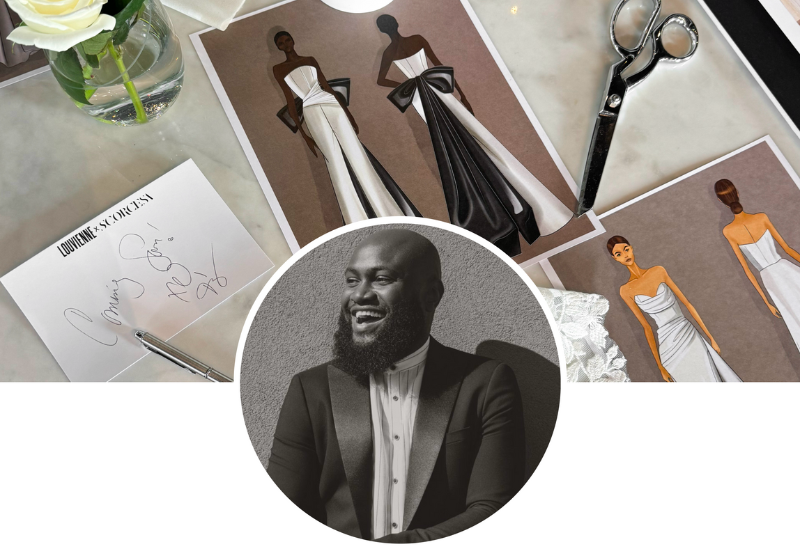
Charles Corvsky Dieujuste’s career was once on a very different path – one that led him through the halls of medicine, where precision and skill were paramount. But today, those hands craft intricate bridal gowns, draping fabric with the same meticulous care once reserved for surgical stitches.
Raised in a traditional Haitian household where practicality was valued over creativity, Dieujuste charted his course, embracing the unpredictability of a creative life over the stability of a nine-to-five. His transition from science to fashion wasn’t immediate, but the discipline he mastered in the lab is now the cornerstone of his work at his New York City atelier.
On a particularly stormy evening in New York City, as the winds howled, Dieujuste sat down with Dream Weddings’ Priyanka Rajput for a conversation about his career and creative journey. But just as they began, he was called away to his nearby workshop for a last-minute pattern adjustment on a gown set to be flown to California the following day, giving us true insight into the life of a designer.
Amidst the flurry of work and the roaring storm outside, the illustrious designer shared insights into his creative process, the journey that led him here, his partnership with Louvienne and what it takes to bring a bride’s vision to life.
You grew up in Haiti. Could you tell is about your childhood and how it influenced your design journey? My father was a professor, and my mother took on various roles throughout her career, but one that stands out in my memory is her time at a major textile company in Haiti. It was through her that I was first exposed to different types of fabrics long before I ever considered a career in fashion.
My aunt, as well, was a seamstress, and I remember my mother bringing home fabrics for her to sew clothes for my sister and me. Those early experiences – watching textiles transform into garments – shaped my appreciation for design.
My culture and upbringing became an unspoken influence in my creative journey. And although, at first, my parents weren’t entirely on board with my decision to pursue fashion, over time, as they saw the dedication and effort I put into my work, they’ve come to embrace it.
Was there a specific moment or memory when you realised fashion was your passion? I started sketching when I was nine or 10, and my first drawing was for my sister. It was a dress, and I even made a paper replica before attempting to sew it with actual fabric. She was only three then, so I doubt she remembers, but that was the moment it all began for me.
That said, fashion wasn’t actively encouraged in my household, which, in hindsight, felt a bit disappointing. Eventually, I moved on. I got involved in different activities, picked up new hobbies, and turned to sports – volleyball is still my favourite.
I even majored in biology – partly to appease my father – but that path didn’t quite work out. Looking back, though, that early moment of sketching and sewing was my first real spark, even if I didn’t recognise it at the time.
Who was your inspiration growing up? My mother has always been my greatest role model. Her resilience is unmatched; honestly, I can’t think of anyone who could have been a more fitting source of inspiration. If I were to name anyone else, it would feel like a disservice to her and all her efforts. It’s not just her hard work – her sense of style was incredibly inspiring, too.
When she was younger, she had the most iconic looks. I vividly remember when I left Haiti for America, she gifted me her Oscar de la Renta perfume bottle – a beautiful glass bottle with green folds. It’s a memory I hold close. She also gave me a delicate gold necklace, and before I left, she made sure I had dining lessons, preparing me for every situation life might throw my way.
Her influence has shaped not only my work ethic but also my sense of style and the way I approach the world.
Starting your own brand is no small feat – why bridal? What drew you to this particular, very emotional corner of fashion? When I started my career at The Row, I saw firsthand how women moved through their day – seamlessly transitioning from work to evening events, needing outfits that could keep up. That experience shaped my understanding of design, but I hadn’t yet found my niche. Then, right before the pandemic, I amicably parted ways with another employer. Suddenly, I was unemployed in the middle of global uncertainty and wondered, “What do I want to do for the rest of my life that will truly make me happy?”
I didn’t panic. I focused on ensuring my loved ones were okay. But in that stillness, I found clarity. I decided to relaunch my brand at a time when micro-weddings were becoming the norm, and brides were rethinking traditional gowns in favour of something more effortless and comfortable.
That’s when I revisited a collection I had designed years before. One particular look – tailored trousers paired with a beautifully structured top – felt especially relevant. When WWD called it a “refreshing” take on bridalwear, I knew I was onto something.
But beyond the designs, what truly makes this work fulfilling is the emotional connection. I’m contributing to one of the most important moments in someone’s life. Years from now, a bride’s daughter might say, “Oh my goodness, Mom, you wore Scorcesa on your wedding day!” – and that, to me, is priceless. It’s about creating something that lives on and becomes part of a family’s history. That’s not a feat many designers can boast about, which makes this journey so special to me.

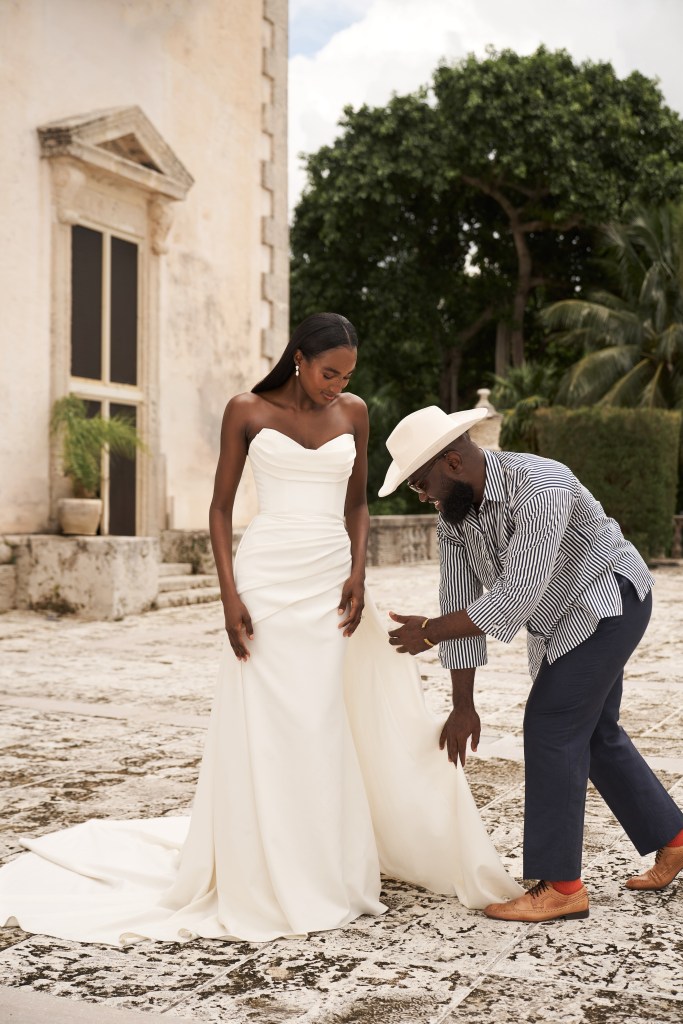
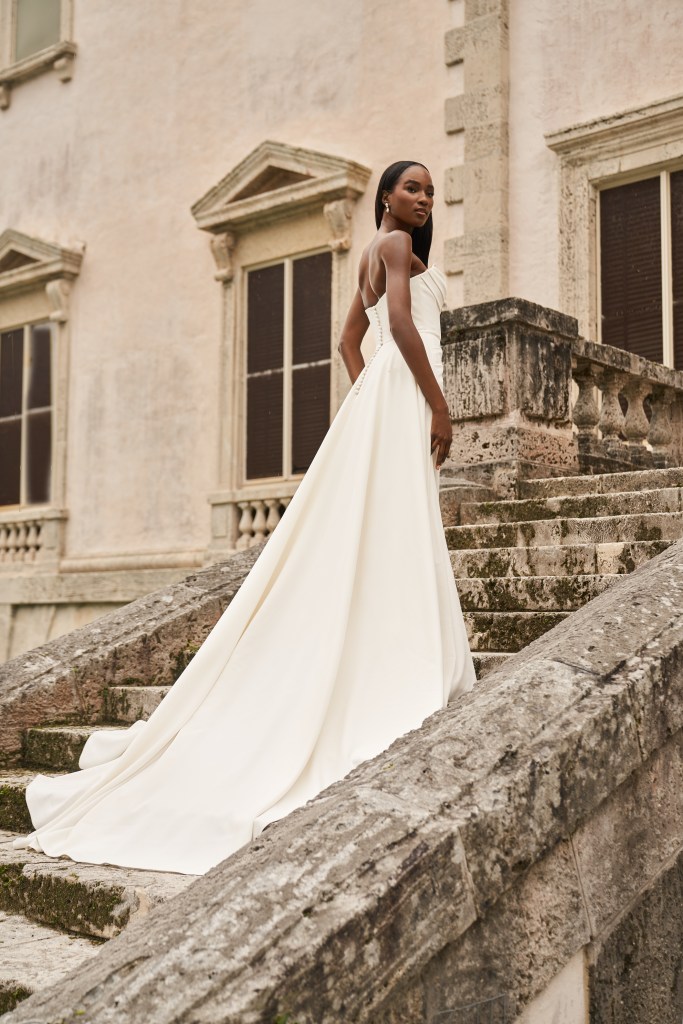
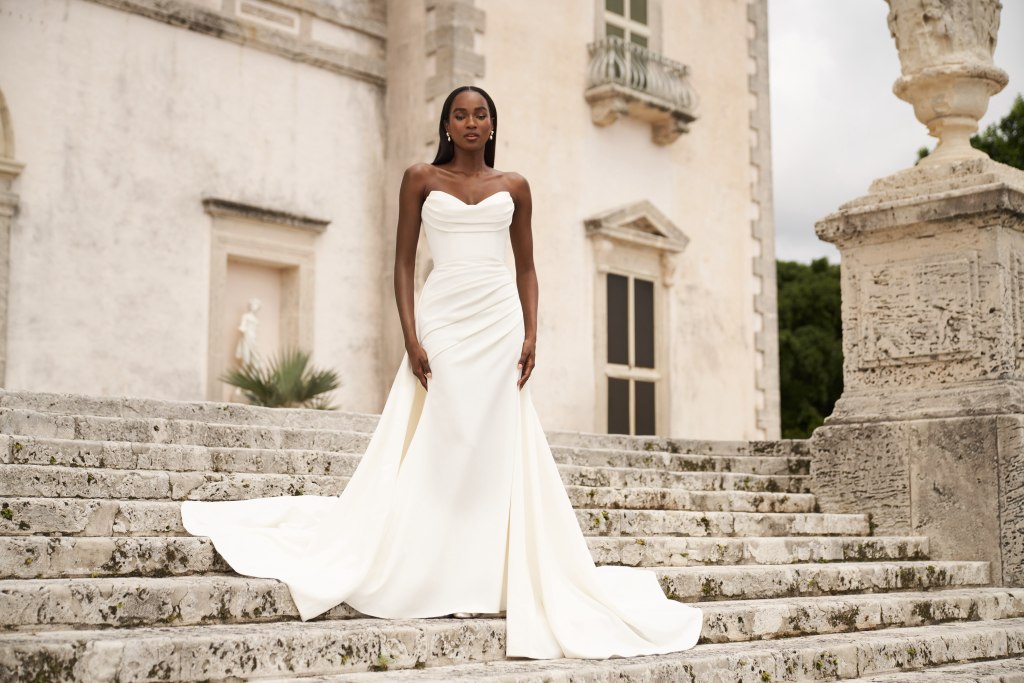
The Scorcesa bride feels like she possesses an effortless, confident energy. Who is she, and what, according to you, is her story? The Scorcesa bride is the ultimate modern woman: unapologetic, independent and unafraid to take the unconventional route. The women I design for are always on the go, often juggling work meetings while squeezing in dress fittings. More often than not, they’re also paying for their wedding, making choices that truly reflect their personality rather than tradition or expectation.
Because of that, they’re not looking for anything cookie-cutter. They gravitate toward pieces that transcend trends, opting for outfits they’ll still love years later. If a bride chooses a pantsuit for her wedding today, I want her to look back a decade later and still be just as in love with it.
I firmly believe that when a woman is confident from within, she can wear anything. One of my brides had a scar on her back, and in the beginning, she was unsure about showing it. But by the final fitting, she had fully embraced it and chose a backless gown for her big day, a decision that embodied her strength and confidence.
At its core, Scorcesa is for the contemporary bride who values individuality and modernity, with a touch of my cultural heritage woven in.
Designing wedding gowns is such a personal process. How do you go from an idea to creating a dress fit for the big moment? Inspiration always comes first, but the process varies from collection to collection. Sometimes, I have a clear idea and start sketching immediately. Other times, I immerse myself in art, culture and everyday experiences, and let those influences naturally shape my designs.
One thing I actively avoid is chasing trends. In fact, when I see a trend taking over, I run in the opposite direction. Too many bridal brands rework the same silhouettes, bustles, slits and cuts, and after a while, it all starts to feel repetitive, and there’s no individuality left. For me, bridal design is a creative outlet, a chance to push boundaries and add something fresh to the conversation.
I truly admire Indian wedding fashion. The outfits are incredibly vibrant, with intricate beadwork, and no two ensembles ever feel the same. That’s how I believe bridalwear should be: deeply personal, distinctive and reflective of the person wearing it.
What’s one other thing you’re completely obsessed with right now in bridal fashion? And is there a trend you’re secretly hoping will disappear? I’m obsessed with accessories. They’re an effortless way to elevate a bridal look. Diamonds and pearls have traditionally been the go-to, but there’s so much innovation happening in jewellery right now. I love it when brides experiment, whether adding unexpected textures to their earrings, stacking unique rings or incorporating statement pieces. It brings so much personality to the overall look.
As for a trend, I wouldn’t mind seeing less of… It’s not exactly a trend, but I’ve never been a fan of illusion mesh. The beige-toned mesh against white fabric often ends up being too visible, which can be distracting rather than seamless. It’s one design element I try to avoid in my work because I think there are more refined ways to achieve that effect.

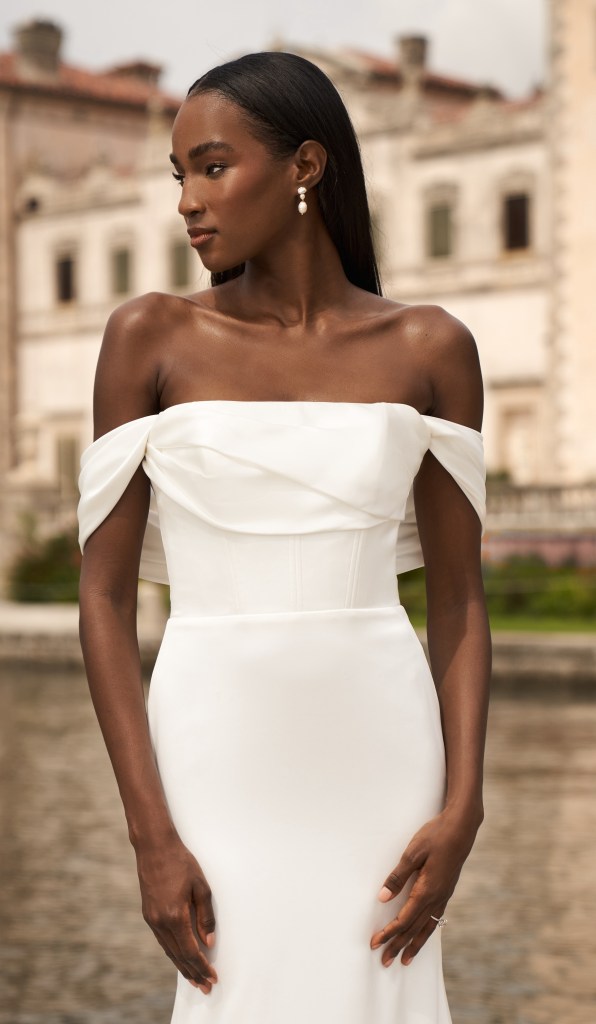
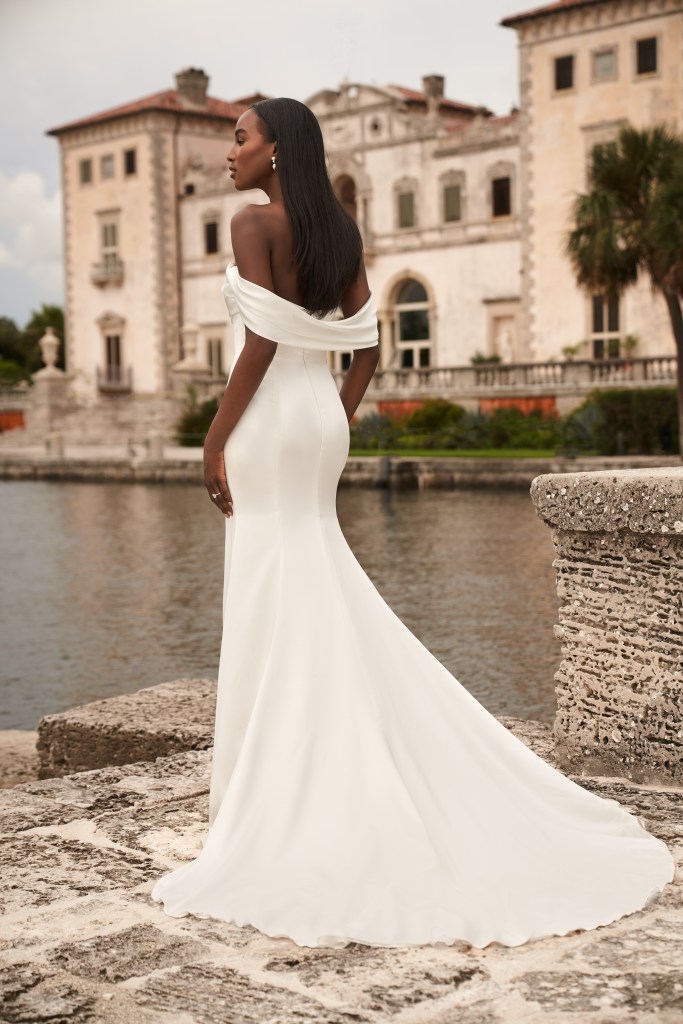
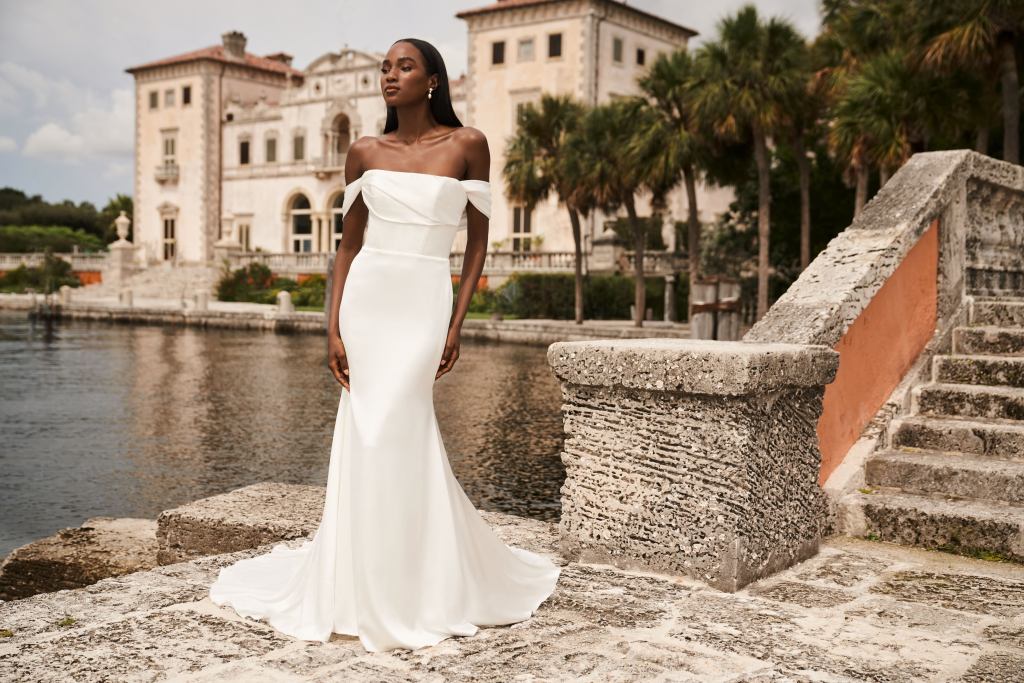
Your recent partnership with Louvienne is so exciting. Tell us everything about Louvienne x Scorcesa: Partnering with Louvienne has been a fantastic opportunity to bring my designs to a broader audience, and the brand has been incredibly supportive throughout the process. When I first presented my sketches, they had difficulty deciding which pieces to proceed with, which is a great problem in fashion!
For this collection, exclusively available at Lovely Bride, I envisioned creating a wardrobe for brides who aren’t looking for what’s already out there. I wanted the pieces to feel contemporary yet effortless, designed for women who embrace a different bridal style.
I’ve always been inspired by the blend of masculine and feminine aesthetics. A perfect example is Bianca Jagger, who wore an Yves Saint Laurent tuxedo jacket with a bias-cut skirt and a statement hat on her wedding day in 1971. She looked fabulous, and her confidence redefined bridal fashion.
That made me realise there’s a whole world of women who aren’t wearing gowns for their weddings, women who love structured tailoring, trousers, pleats and a more androgynous edge. They were my ultimate inspiration for this collection.
My advice for newer designers is the same: don’t chase what’s already out there and working; instead, find a niche and own it. That’s my approach, and it’s what led me here.
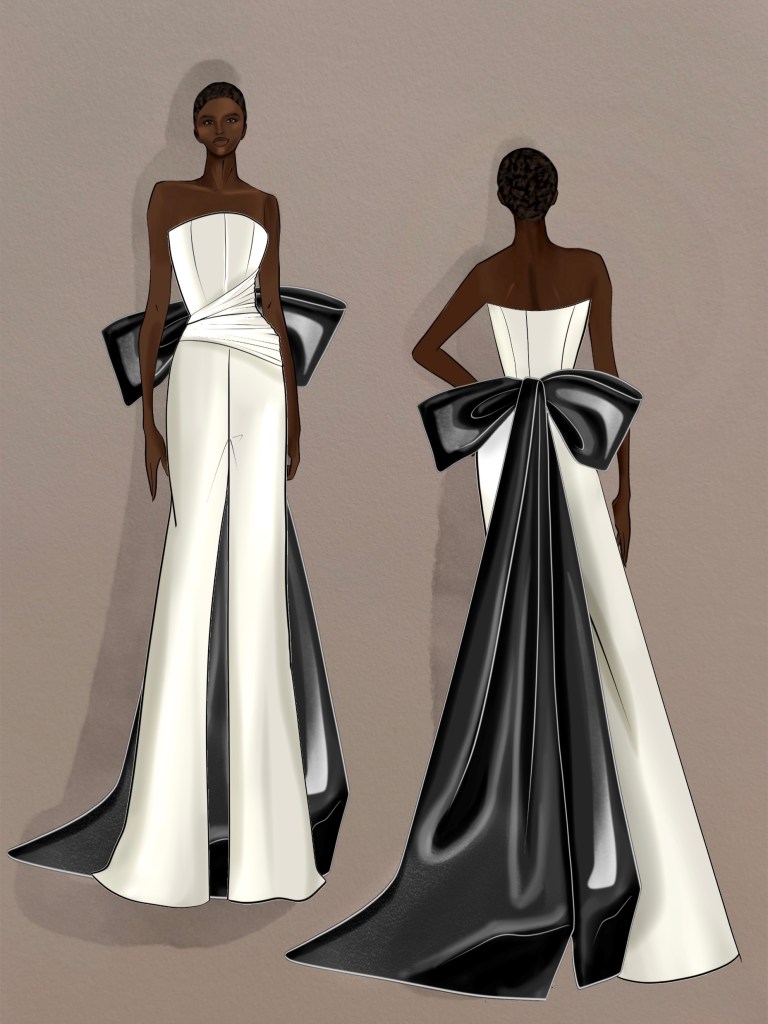
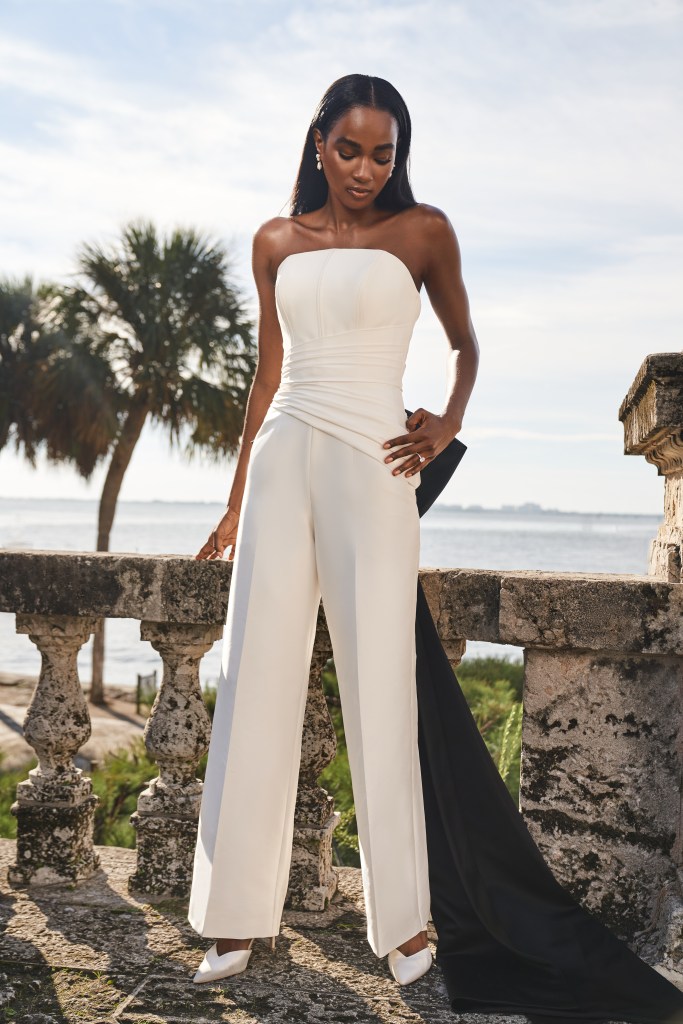
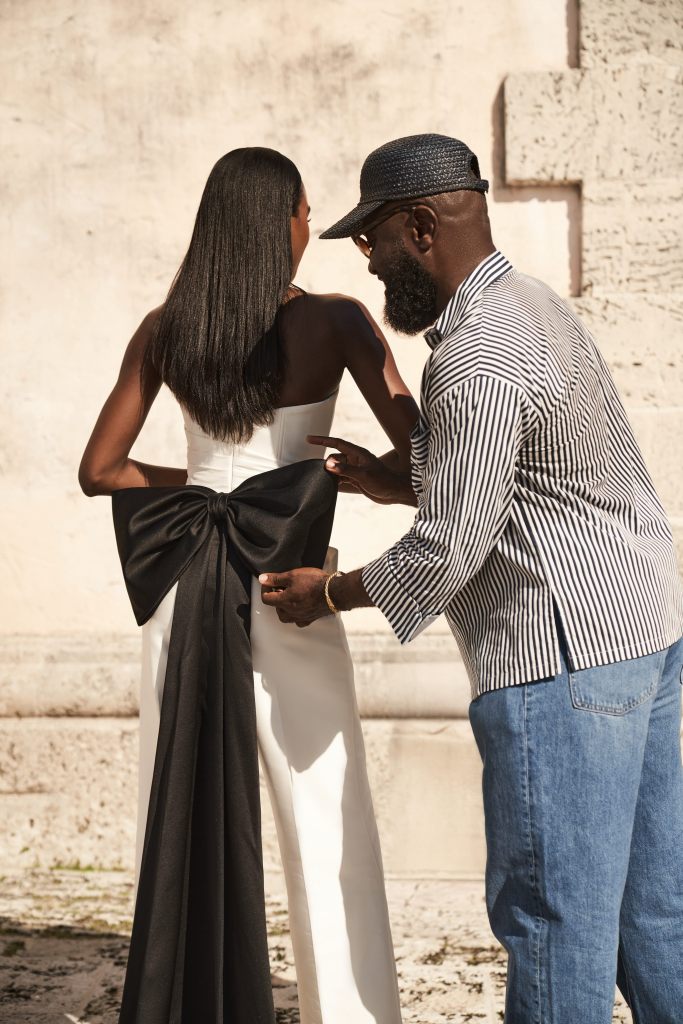
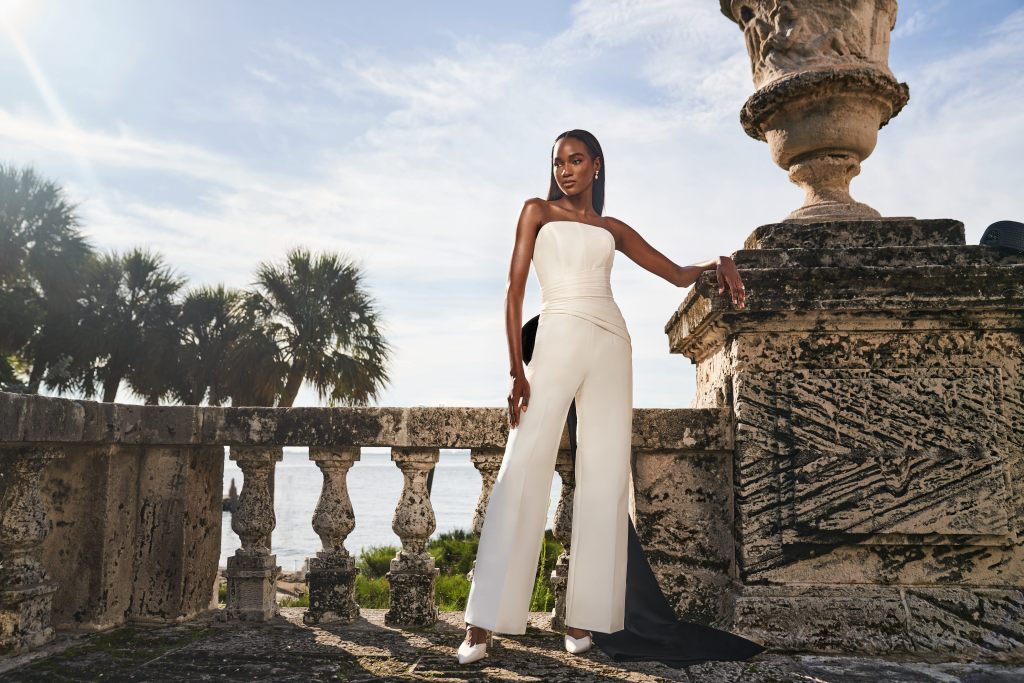
What’s your favourite piece from the collection? The Gisele jumpsuit stands out to me. It’s a sleek white jumpsuit with an oversized black bow at the back. The monochrome palette is a key part of the brand’s DNA and a statement that bridal fashion doesn’t have to be confined to shades of white. There’s room for brides who want something unconventional and should feel empowered to embrace those options.
What’s your best advice for a bride walking into her first appointment, unsure where to start? First, tune out the noise. As a bride-to-be, you’ll hear countless opinions from family, friends and even your partner. While their input can be valuable, starting with your vision is important.
Once you have that clarity, step outside of your comfort zone and try on silhouettes you’d never typically consider. You might be surprised. I’ve had brides who were set on one style only to fall in love with something completely unexpected.
Next, think about your venue. I often see brides in stunning gowns that clash with their setting, which can throw off the overall aesthetic. Your dress should feel and be in sync with the space around you.
Finally, when choosing bridesmaid dresses, don’t just focus on a theme or colour palette; consider fit. Selecting drapes and silhouettes that flatter each body type will not only make your bridesmaids feel confident but also elevate your wedding photos.
In the age of Instagram, how does a bride push past algorithmic temptations to discover her true style? Let Instagram serve as inspiration but not as the final destination.
What’s one part of your design process – or even your career – that not many people know about but is integral to how you work? One aspect people don’t often see is the hustle behind the scenes that young, up-and-coming designers go through to get from point A to point B. While people admire the final product, they rarely understand the hard work and sacrifices in making it all come together.
For example, just today, I had to leave our interview early to rush back to the workshop to assist with the pattern paper and cut work. So, you can see that it’s not glamorous, and there’s no set schedule. Calls can come anytime, and I have to answer and be there.
There are countless moments of frustration, too. Sometimes, certain fabrics don’t arrive on time, or sample-makers cancel at the last minute. These uncontrollable situations can throw everything off track, but you have to stay composed and hold it all together as a designer. That behind-the-scenes chaos is essential to the process, but it’s also what makes the final product so rewarding.
If you could dress any – real or fictional – bride in the world, who would it be? And what would you design for her? Since I saw her in Pretty Woman, I’ve always wanted to dress Julia Roberts. She’s someone my mother and I both connect with deeply. My mother watched Pretty Woman countless times and adored the polka dot dress, so if I had to pick a top choice, it would be Julia Roberts.
The second person I’d love to dress is Lauren Hutton. I’d love to see her in one of my pieces, preferably a pantsuit. She embodies effortless chic, and I think she’d look incredible in something bold and tailored.
Lastly, I would love to design something for British actor Gugu Mbatha-Raw. She has such a peaceful, graceful presence, and I think her calm energy would pair beautifully with a structured silhouette.
Finally, if you could give 2025’s brides-to-be one piece of advice to feel their absolute best on the big day, what would it be? On the big day, my advice would be to take a moment for self-reflection. Before everything gets too busy, dig deep into why you’re marrying your partner and spend five minutes alone reflecting on that. When you centre yourself in that feeling, everything else will fall into place.
During the wedding prep, I also recommend committing to at least one fitting alone. Step away from the noise and the many opinions coming your way. You’ve got bridal experts and stylists guiding you, and that’s more valuable than 300 opinions from your loved ones. Your big decisions should be yours, so take a moment to embrace the process and make them with clarity. It’ll help you feel more confident and grounded on the big day.
Photography by Valentina Quijada